


Advocating for themselves
From religious recognition to bureaucratic hurdles: The Migrant Advisory Council in Leipzig enables migrants to participate in local politics and make their voices heard at the city council.
In a city as big as Leipzig, a variety of different interests come together in a mix of histories, origins, cultures, languages, and traditions. According to the City of Leipzig administration, in 2024 a fifth of all inhabitants had a migration background, and around 92.000 people did not possess German citizenship. This is why the Migrant Advisory Council (Migranten- und Migrantinnenbeirat) to the city of Leipzig was created in 2009, with the goal of integrating the interests of people with a migration background into political discussions and functioning as a direct channel of information from the people to the city council. It is their task to advocate for migrants’ needs, make their voices heard in local politics, and promote solidarity in the city.
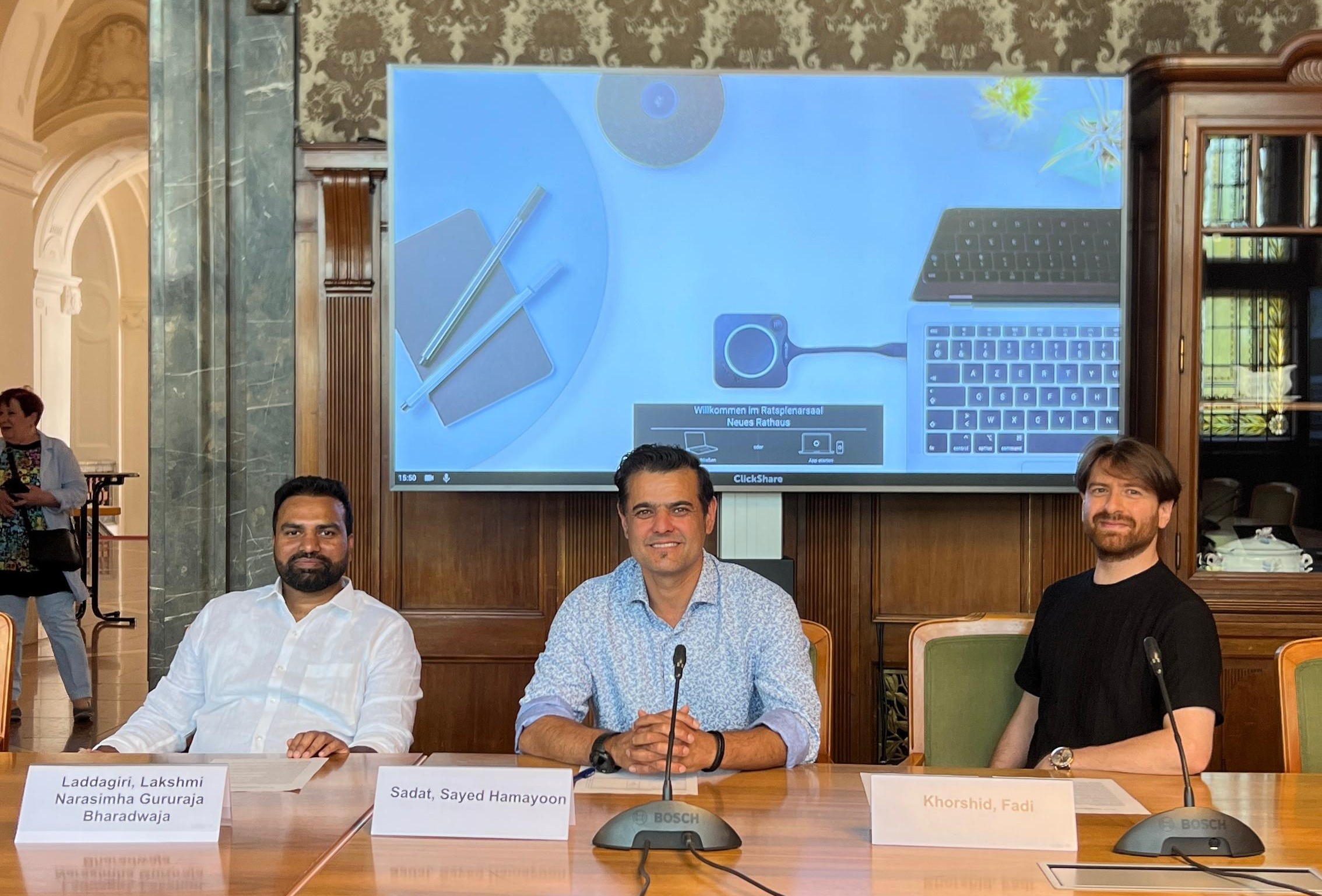
Khorshid and the other members are proud to represent their people. Credits: Fadi Khorshid
In the last election in April 2025, new representatives were chosen and officially started in office in August. Each of them represents a different nationality or region of the world to ensure many different views are represented. Either they themselves or their parents migrated to Germany, representing late repatriates, naturalized citizens, and foreigners with different statuses. One of them is Fadi Khorshid, who arrived in Germany from Syria in 2016. “I am proud and blessed to have been elected to represent Arab people and especially Syrians”, he explains. Ever since winning the election, he has been getting messages from people telling him that he is the only right candidate for the job, which fills him with joy.
Representatives for all areas of the world
Out of the 23 members in the Migrant Advisory Council, 16 are elected migrants while the rest are representatives of parliamentary groups. They participate as volunteers while working in professions varying from interpreters and legal scholars to filmmakers and IT experts. Khorshid is a social worker for the Johanniter and notes: “It is not easy to coordinate my job with the volunteering. But I am in it with my heart.” It is important for him to help people – especially other migrants – through the situations that he already had to overcome. He had finished his bachelor’s degree in philosophy in Damascus before fleeing to Germany but never got the chance to do a master’s, having to provide for his family, even though he had been accepted into a programme at the University of Leipzig.
The Migrant Advisory Council holds its plenary session once a month, open to the public, where members discuss new proposals they want to submit to the city council. For example, the right for Muslim children to take a day off school on Eid al-Fitr, one of the highest celebrations for Muslims had been a proposal of the previous board that was submitted to the city council and accepted. Right now, the newly elected advisory council is trying to figure out the most important concerns of migrants in Leipzig. Khorshid explains that they are still finding their way and adjusting to their new positions.
Bringing one’s own experiences into the discussion
They have created working groups specialized in certain topics and problems they want to target in the future. For Khorshid, it is a goal to create a group specifically discussing the struggles of migrants with the foreigners’ registration office. “It is unbelievable,” he says. “Here in Leipzig, people can expect to wait for three years until their application for naturalisation is completed.” He knows of a lot of people who decided to leave Leipzig due to those waiting times and move to another, more rural city because applications get processed there within a few months.
“Leipzig is my home,” Khorshid emphasises, not wanting to leave but trying to make it a better place for others. He is happy for the opportunities his work on the board has provided for him to be in contact with the head of the foreigners’ registration office and to discuss the problems people are facing with him directly. Other groups have, for example, taken a focus on the Jobcenter in Leipzig or are working on the education opportunities of people and children with a migration background. “Everyone is bringing their own experiences into the working of the Migrant Advisory Council,” Khorshid states. People have asked him if his work on the board really helps. His response to them is, “When we can make our voices heard, that is good. I can help my community.”
Cover: Fadi Khorshid


Hochschuljournalismus wie dieser ist teuer. Dementsprechend schwierig ist es, eine unabhängige, ehrenamtlich betriebene Zeitung am Leben zu halten. Wir brauchen also eure Unterstützung: Schon für den Preis eines veganen Gerichts in der Mensa könnt ihr unabhängigen, jungen Journalismus für Studierende, Hochschulangehörige und alle anderen Leipziger*innen auf Steady unterstützen. Wir freuen uns über jeden Euro, der dazu beiträgt, luhze erscheinen zu lassen.